
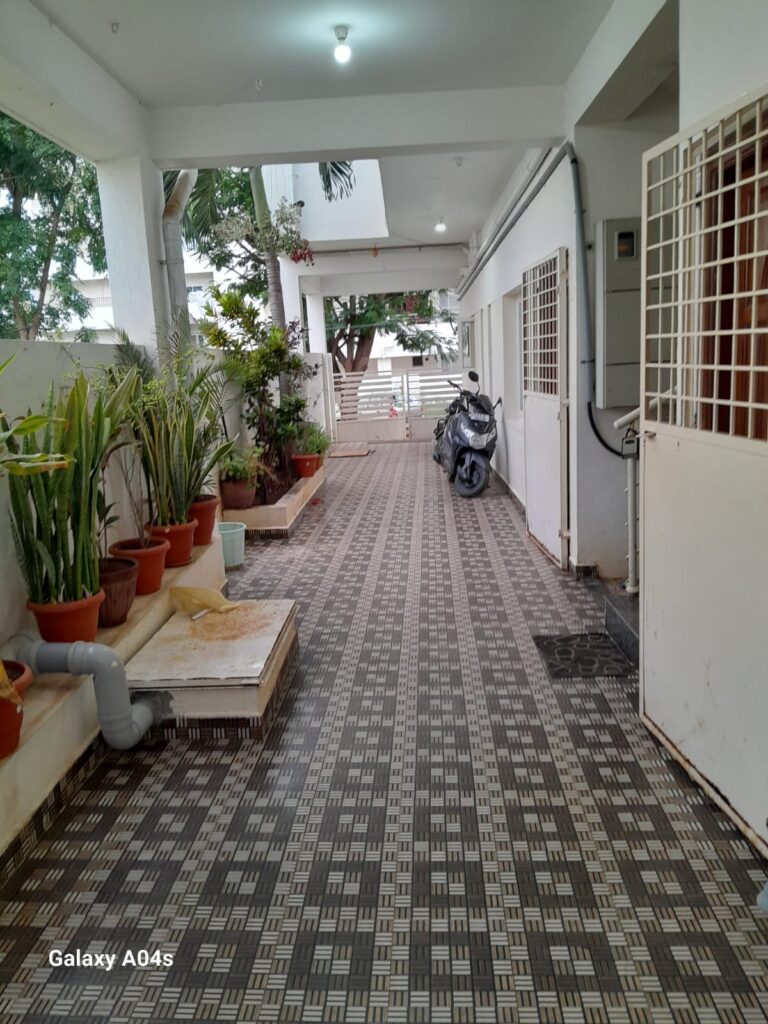
As a public policy and administration professional responsible for designing programs, evaluating governance outcomes, and ensuring effective implementation of government schemes across urban and industrial regions in Bangalore, my role is defined by one core responsibility—public systems must work consistently for every citizen, not just in policy documents, but in real life. Whether I am reviewing development indicators, coordinating inter-departmental execution, or assessing on-ground implementation near Bommasandra Industrial Area, every decision must translate into measurable public impact. During one of my extended policy evaluation and administrative coordination cycles, I stayed at Sagar Niwas, and it provided a stable environment that supported focused governance analysis and uninterrupted planning work.
Public administration is not just about policies—it is about ensuring that intent survives implementation across multiple layers of bureaucracy, resources, and ground realities. A well-designed policy can still fail if execution is weak. The challenge is bridging that gap with clarity, coordination, and accountability.
The first thing I experienced was the ability to review policy documents, implementation reports, and field data without distraction after long stakeholder meetings with departments and field officers. After discussions involving urban development, infrastructure planning, and service delivery reviews, I needed a quiet environment to synthesize insights and refine policy recommendations. The calm environment at Sagar Niwas supported that structured governance analysis work.
Another important factor was the space to organize policy frameworks, monitoring dashboards, and program evaluation reports efficiently. Public systems involve multiple layers—budget allocation, scheme execution, beneficiary tracking, and outcome measurement. Having a structured setup made it easier to maintain clarity across governance processes.
Location also played a practical role in execution efficiency. Being close to Bommasandra Industrial Area reduced travel time between administrative offices, field sites, and implementation zones. This helped during inspections, coordination meetings, and ground-level assessments.
The flexibility of working hours was essential. Governance work does not follow fixed timelines—emergency decisions, field escalations, and policy reviews can arise at any time. The independent setup at Sagar Niwas allowed uninterrupted availability during critical administrative planning and review cycles.
Another key aspect is mental clarity during high-impact policy decision-making situations. Public administrators must balance political priorities, resource constraints, and citizen expectations simultaneously. Having a calm environment helped ensure decisions were balanced, rational, and implementation-focused.
The availability of self-managed living arrangements also improved productivity. Being able to handle personal routines independently reduced distractions and allowed more focus on policy analysis, report writing, and program design.
From a professional standpoint, the environment also supported confidential handling of governance data, administrative reports, and sensitive policy deliberations. Public administration involves critical and often confidential information. A private and controlled environment ensured secure handling of all materials.
Another advantage was maintaining a consistent governance rhythm across planning, execution monitoring, evaluation, and policy revision cycles. In public systems, consistency ensures accountability and better service delivery. The stable environment at Sagar Niwas helped maintain discipline across administrative workflows.
Cost efficiency is also a practical consideration, especially for long-term governance roles involving continuous fieldwork, data review, and multi-department coordination. Compared to hotels, service apartments offer a more stable and practical working environment.
What stood out most was how the accommodation supported the entire governance lifecycle—from policy design and planning to execution monitoring, evaluation, and system improvement. It functioned as a reliable base during high-responsibility public administration work.
Over time, I’ve realized that governance is not only about laws, schemes, or institutions—it is also about environment. Clear thinking, structured execution, and fair decision-making depend heavily on mental stability.
Sagar Niwas provides that stability. It offers calmness, structure, and comfort—qualities that align perfectly with the demands of public policy and administration professionals.
In conclusion, for governance leaders working in Bangalore—especially in rapidly developing industrial and urban zones like Bommasandra—choosing the right accommodation is essential for maintaining clarity, accountability, and execution effectiveness. Service apartments like Sagar Niwas provide the ideal environment to analyze, plan, and implement public systems without distraction.
When your job is to serve the public, your environment should help you think without bias or noise.
Contact Sagar Niwas:
🌐 www.sagarniwas.com
📞 +91 9972769456